
Authors: D. Marinova, L. Borislavov, S. Stanchovska, K. Konstantinov, M. Mutovska, S. Stoyanov, Y. Zagranyarski, Y. Danchovski, H. Rasheev, A. Tadjer, R. Stoyanova

Abstract:
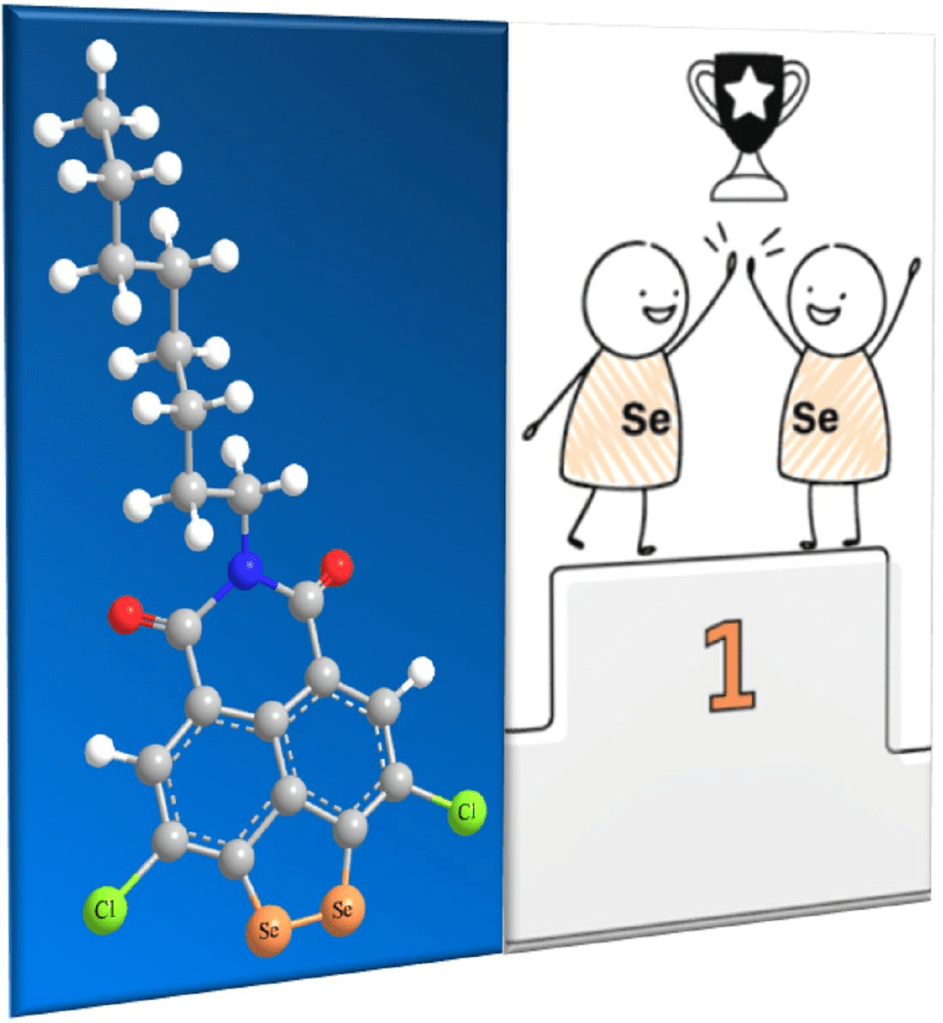
In recent years, bipolar organic electrode materials have gained recognition as competitive alternatives to inorganic materials due to their unique multielectron redox mechanism for energy storage. In this study, we examined the mechanism of redox reactions in naphthalimide (NI) derivatives when used as electrodes in lithium half-cells with ionic liquid electrolytes. The NI derivatives consist of three building fragments: an aromatic naphthalene core, N-alkylated imide unit, and a peri-dichalcogenide bridge. The integration of electrochemical and microscopic methods with DFT calculations facilitates the delineation of the role of each fragment in the oxidation and reduction reactions of NI derivatives. It is found that the peri-dichalcogenide bridge is mainly involved in the oxidation of NI derivatives above 3.9 V, the charge compensation being achieved by electrolyte TFSI− counter-ions. The reduction of NI derivatives with two Li+ ions is mainly due to the participation of the chalcogenide bridge, while after interaction with the next two Li+ ions, the imide fragment and the naphthalene moiety contribute equally to the reduction. Based on the leading role of the peri-dichalcogenide bridge, the redox properties of NI derivatives are effectively controlled by the gradual replacement of S with Se and Te atoms in the bridge. To improve the electronic conductivity of NIs, composites with rGO are also synthesized by a simple procedure of mechanical mixing in a centrifugal mixer. The composites rGO/NIs display a good storage performance, the best being the Se-containing analogue.
 VIHREN-CARiM 2019